
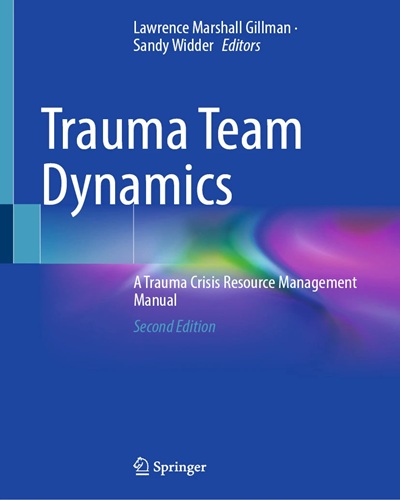
Most medical errors are not rooted in technical skills but arise from decision-making flaws, poor information gathering, and ineffective communication. Insights from other high-risk industries, like aviation, reveal similar issues, prompting bodies like NASA and the airline industry to develop Crew Resource Management (CRM) training. This method focuses on teamwork and non-technical skills to mitigate human errors and enhance patient safety.
In medicine, particularly in anesthesia and critical care, there has been a gradual adoption of these training strategies. Trauma surgery, while slower to embrace these concepts, is now seeing an uptick in simulation-based training. The first edition of “Trauma Team Dynamics” was groundbreaking, integrating the complexities of trauma care and demonstrating how to streamline processes through team-focused training.
Since the book’s initial release, CRM and team training have grown significantly, with notable advancements in training scope, topic refinement, and strategies to tackle ongoing challenges. The second edition greatly expands on original CRM discussions, addressing contemporary issues such as followership and conflict resolution, while introducing mindfulness techniques to manage stress and prevent burnout.
Additionally, the new edition explores innovative trauma care approaches, like less invasive endovascular treatments such as Resuscitative Endovascular Balloon Occlusion of the Aorta (REBOA) and provides in-depth insights into teleresuscitation and trauma care in challenging environments. With 28 new chapters contributed by experts in trauma, critical care, emergency medicine, nursing, respiratory therapy, and military applications, the second edition of “Trauma Team Dynamics” serves as both a daily clinical resource and a comprehensive reference guide. It also offers self-assessment questions and guidance on designing and implementing CRM curricula, ensuring it meets the needs of today’s medical professionals.