
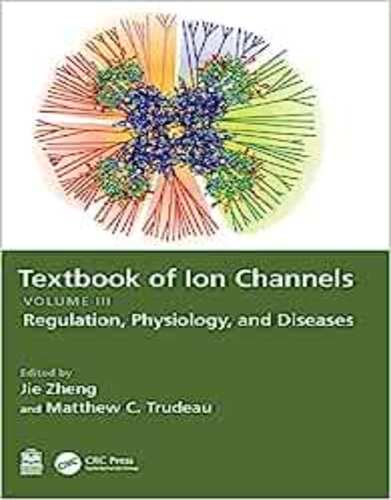
The three-volume Textbook of Ion Channels offers students, teachers, and researchers a comprehensive reference source on ion channels. The membranous proteins known as ion channels mediate the detection and response to sensory stimuli including light, sound, odor, and taste. They also control the reaction to physical stimuli like temperature and pressure. Ion channels also control the electrical characteristics of neurons and cardiac cells. Ion channels play a key role in the control of the fundamental salt balance in non-excitable tissues, which is essential for homeostasis. Ion channels are found in the membranes of intracellular organelles as well as the surface membrane of cells, providing them the special ability to connect with the environment and control internal homeostasis.
Ion channels play a crucial role in human health and disease, and they serve as essential pharmaceutical targets in the treatment of mental illness, cardiac disease, anesthesia, pain, and other therapeutic applications. Modern research methodologies, including single ion-channel measuring techniques, animal models of ion channel illnesses, and human clinical trials for ion channel medications, are strong and diversified.
Key ion channel regulators and their processes are discussed in Volume III, along with the function of many ion channels in a few physiological systems and instances of ion channel malfunction in various disorders. Splice variations, calcium-calmodulin regulation, G protein control, and lipid regulation are among the chapters on ion channel regulation. Ion channels of the heart, ion channels in immune cells and their function in pancreatic beta cells and regulation of insulin secretion, and the function of channels in sperm and eggs are a few examples of ion channels in physiological systems. Ion channel function in epilepsy, cystic fibrosis, and pain syndromes are given special consideration in Volume III, whereas disease causes are integrated into the chapters of Volume II.
The reader is given an introduction to the fundamental ideas required to comprehend the workings of ion channels in all three volumes. They also provide a technical overview of ion channel research, a contemporary look at the characteristics of the main ion channel families, and coverage of significant examples of ion channel functions in regulation, physiology, and disease.