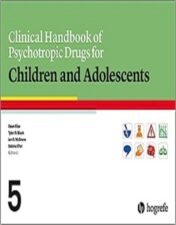

For kids and teenagers, quick and complete information on psychotropic medicines.
– Reliable and current
– Particular to children and teenagers
– Tables and charts aid in decision-making
– Full color and icons
Psychiatrists, pediatricians, psychologists, doctors, pharmacists, nurses, and other mental health professionals use The Clinical Handbook of Psychotropic Drugs for Children and Adolescents as a standard reference and working tool.
• Filled with distinctive, simple-to-read comparison tables and charts (dosages, side effects, pharmacokinetics, interactions, etc.) for a quick review of available treatments
• Concise, bulleted information on all medication classes, including on- and off-label uses, negative and positive interactions, pharmacodynamics, nursing implications, and anything else you need to know about each category of medication.
• With easily identifiable iconography and full color throughout, you can discover all the information you need at a glance. Comparison charts that summarize potential interactions and side effects. Patient and caregiver information sheets with clear writing are available for download as printable PDF files.
All mental health professionals who work with children and adolescents and require a current, user-friendly, comprehensive review of all the most pertinent information about psychotropic medicines must have this book.
Updated for this edition:
• New chapters on prescribing to children and adolescents safely and morally, pharmacogenetic information for popular psychotropic medications, and managing aggression in children and adolescents
• The Product Availability tables now use nomenclature based on neuroscience.
• Anxiolytics section on buspirone and benzodiazepine comparison table changed; Antipsychotic-Induced Extrapyramidal Side Effect (EPSE) entirely revised; New section on monitoring scales for EPSE
Chapters on Mood Stabilizers and Natural Health Products have both undergone major revisions.
• New agents include deutetrabenazine, ethopropazine, lemborexant, lumateperone, orphenadrine, tetrabenazine, valbenazine, and viloxazine. • New unapproved treatments have been reviewed, including early evidence for cannabidiol and folinic acid for autism spectrum disorder and ketamine for mood disorder.
• Among the brand names and new formulations are Austedo, Caplyta, Dayvigo, Drizalma Sprinkle, Elepsia XR, Eprontia, Evekeo ODT, Gocovri, Hetlioz LQ, Ingrezza, Invega Hafyera, Jornay PM, Loreev XR, Lybalvi, Osmolex ER, Oxtellar XR, Pars