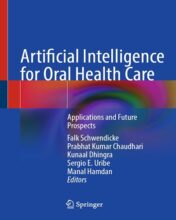


Artificial intelligence (AI) is significantly transforming the landscape of diagnostics, treatment planning, and patient care across various medical disciplines. In particular, dentistry stands as a pivotal sector in this technological evolution, benefiting from AI’s capacity to analyze complex data sets to enhance clinical practices, empower patients, and tackle public health issues.
This extensively illustrated publication provides an in-depth exploration of the foundational concepts underpinning AI. It elucidates its practical applications within the realm of oral health and examines the potential future directions of this technology. Spanning a wide range of topics, from oral pathology and maxillofacial surgery to prosthodontics, orthodontics, endodontics, and dental education, it delivers compelling, evidence-based insights into the ways AI is redefining dental practice.
In addition to discussing the clinical implications, this book also addresses the significant risks and challenges linked to the implementation of AI technologies. It outlines a coherent framework for confronting ethical considerations, promoting transparency, and developing strategies that prioritize innovation while ensuring patient safety and well-being.
Targeted at dental professionals as well as an interdisciplinary audience—including educators, researchers, policymakers, and the general public—this book serves not only as a comprehensive guide but also as a call to action for the responsible adoption of AI’s transformative capabilities.
Whether you are a seasoned dental practitioner, an academic engaged in research, or an individual with a keen interest in the convergence of AI and healthcare, this work aims to inspire and enrich your understanding of the future of dentistry.
– Addresses a wide range of specialized topics, including foundational concepts, reporting guidelines, and ethical and regulatory considerations.
– Provides a thorough review of the rapidly evolving field of artificial intelligence (AI).
– Equips readers with a contemporary, evidence-based understanding of the subject matter.