
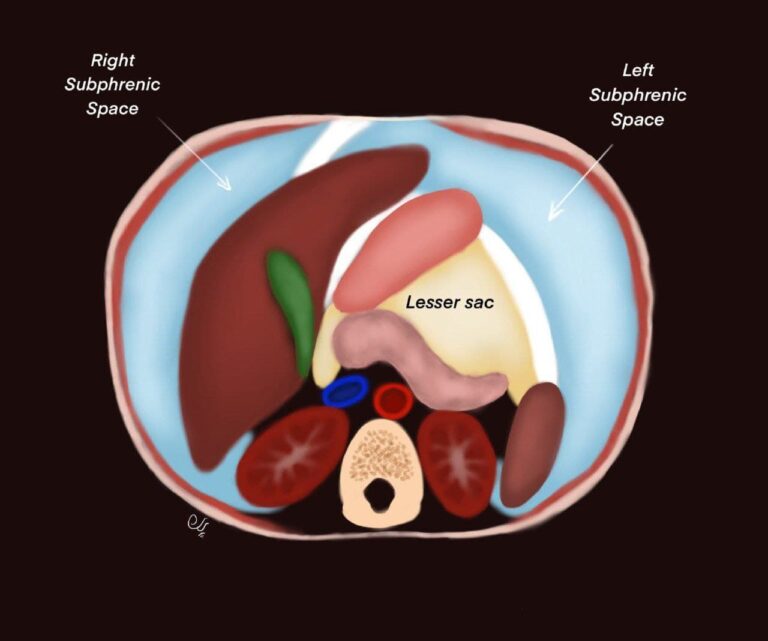
This course will cover the peritoneum and mesentery. Each topic will be presented separately while also highlighting the disease processes that overlap these areas. This course reviews some of the most common entities and least common entities you may encounter in these organs. The peritoneum and mesentery are important structures to bear in mind because knowledge of their anatomy and function can really go a long way making a differential diagnosis.
After completing this course, you will be better able to:
- Apply appropriate search patterns to ensure high quality case assessment
- Identify key anatomical landmarks, variations, and abnormalities on imaging
- Accurately interpret advanced imaging cases
- Formulate definitive diagnoses and limited differentials
Faculty & Planning Disclosure
Peritoneum and Mesentery Introduction – 1 min
Anatomy (Peritoneum) – 3 min
Acute – Free Air – 3 min
Acute – Peritonitis – 2 min
Acute – Hernia – 3 min
Primary (Peritoneum) – 1 min
Mesothelioma (Peritoneum) – 4 min
Carsinomatosis – 6 min
Infection (Peritoneum) – 3 min
Inflammatory – Encapsulating Peritoneal Sclerosis – 4 min
Form and Function (Mesentery) – 1 min
Acute – Internal Hernia – 6 min
Tumors (Mesentery) – 0 min
Desmoid – 2 min
Carcinoid (Mesentery) – 2 min
Infection – Abscess – 1 min
Misty Mesentery – 2 min
Lymphoma (Mesentery) – 1 min
Case – Putting It All Together – 3 min
Creeping Fat – 3 min
Mesenteric Adenitis – 2 min
Case 1 (Peritoneum and Mesentery) – 2 min
Case 2 (Peritoneum and Mesentery) – 5 min
Case 3 (Peritoneum and Mesentery) – 7 min
Course Evaluation